
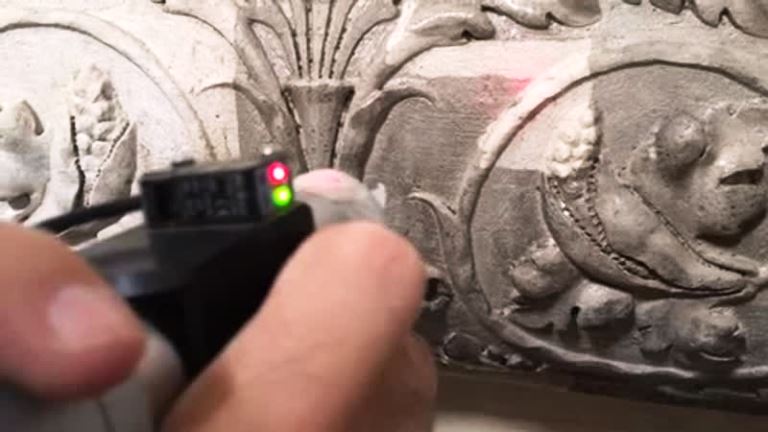
Laser cleaning of historical monuments is an advanced and effective method used for the restoration and preservation of cultural heritage sites, artworks, and architectural structures. This technique involves using high-powered lasers to remove contaminants, such as dirt, soot, graffiti, biological growth, and other unwanted substances from the surface of historical monuments.
Here are some key points about laser cleaning of historical monuments:
- Non-Contact Cleaning: Laser cleaning is a non-contact method, meaning it does not involve physical contact with the surface being cleaned. This minimizes the risk of damage to delicate or fragile materials.
- Precision: The laser system can be finely tuned to adjust the energy and intensity, allowing for precise and controlled cleaning. This makes it suitable for a wide range of materials, from stone and metal to wood and ceramics.
- Gentle on Substrates: Laser cleaning is relatively gentle on the substrate. It selectively removes unwanted layers without affecting the underlying historical material.
- Selectivity: Lasers can be tuned to target specific types of contaminants. For example, they can remove dark soot from a white marble statue while leaving the original surface unaltered.
- Minimal Waste: Laser cleaning produces minimal waste as the removed material is typically turned into dust, which can be collected and disposed of properly.
- Environmental Benefits: Compared to some traditional cleaning methods, such as chemical cleaning, laser cleaning is environmentally friendly as it doesn’t involve the use of chemicals that can be harmful to the environment.
- Safety: While laser cleaning is generally safe, it requires specialized equipment and skilled operators. Proper safety measures must be in place to protect both the operators and the historical monument.
- Challenges: Laser cleaning is not suitable for all materials. Some surfaces may absorb the laser energy or react unpredictably, leading to potential damage. It’s essential to assess the monument’s condition and choose the appropriate cleaning method.
- Cost: Laser cleaning can be more expensive than traditional cleaning methods, primarily due to the cost of specialized equipment and the expertise required.
- Historical Preservation: The ability to precisely remove layers of contamination while preserving the original material makes laser cleaning a valuable tool in historical preservation and restoration.
- Research and Development: Ongoing research and development in laser technology continues to improve its capabilities, making it even more effective and efficient for cleaning historical monuments.
Laser cleaning is a valuable tool in the field of heritage conservation, as it allows for the restoration of historical monuments while minimizing the risk of damage to the original materials. However, it should be employed by trained professionals who understand the specific requirements of each monument and the appropriate laser parameters for the job.
Physical principles of laser cleaning of monuments
Laser cleaning of monuments is based on several fundamental physical principles. These principles underlie the processes that occur when a high-intensity laser beam is directed at the surface of a historical monument, causing the removal of contaminants and the restoration of the material.
Here are the key physical principles involved:
- Absorption of Laser Energy: When a laser beam is focused on a surface, the material on the surface absorbs the laser energy. The extent of absorption depends on the material’s composition and properties. Contaminants such as dirt, soot, or paint on the surface can also absorb laser energy.
- Selective Absorption: Different materials have different absorption spectra, meaning they absorb laser energy at specific wavelengths more effectively. Laser cleaning systems can be tuned to use the appropriate wavelength for the specific material being cleaned, making it selective and precise.
- Photothermal Ablation: Laser cleaning primarily works through photothermal ablation. When the surface material absorbs the laser energy, it rapidly heats up. This local heating causes the contaminants to expand and evaporate, breaking their bonds with the substrate. The high temperatures generated by the laser cause the contaminants to be removed as gas or particulates.
- Shock Wave Formation: The rapid and localized heating of the surface material can create shock waves due to the expansion of the material. These shock waves can further help dislodge contaminants, making the cleaning process more effective.
- Controlled Pulsed Laser Beams: Laser cleaning systems use pulsed laser beams, which are short bursts of high-intensity laser energy. The controlled pulsing allows for precise control over the energy applied to the surface and reduces the risk of damaging the historical material.
- Fluence Threshold: Laser cleaning is governed by a fluence threshold, which is the minimum energy density required to remove contaminants without damaging the underlying substrate. This threshold varies depending on the material and the type of contamination.
- Non-Contact Cleaning: Laser cleaning is a non-contact process, which means there is no physical contact between the cleaning equipment and the monument’s surface. This minimizes the risk of mechanical damage, which is a concern in other cleaning methods.
- Minimal Residual Waste: The contaminants removed by laser cleaning are typically turned into dust or vapor, which can be easily collected and disposed of. This is advantageous for the environment and for preserving the monument.
- Safety Measures: Operators of laser cleaning equipment must take safety precautions because the high-intensity laser beams can be harmful to the eyes and skin. Proper protective gear and safety protocols are essential.
- Material Considerations: The success of laser cleaning depends on the material’s thermal and optical properties, as well as the nature of the contaminants. Some materials are more suitable for laser cleaning than others.
These physical principles, along with advances in laser technology, have made laser cleaning an effective and precise method for cleaning historical monuments and preserving their integrity. By carefully adjusting parameters such as laser wavelength, pulse duration, and energy level, conservationists and restorers can tailor the cleaning process to the unique needs of each monument, ensuring its protection and longevity.
Experimental cleaning results
The success of experimental cleaning results in laser cleaning of monuments can vary depending on various factors, including the type of historical monument, the nature of the contaminants, the specific laser system and parameters used, and the expertise of the operators.
Here are some typical results and considerations based on experimental cleaning efforts:
- Contaminant Removal: Laser cleaning can be highly effective in removing various types of contaminants, such as dirt, soot, graffiti, biological growth, and paint, from historical monuments. The process can leave the original material underneath significantly cleaner and more visible.
- Selective Cleaning: Laser systems can be fine-tuned to selectively target contaminants while preserving the underlying historical material. This selectivity is a key advantage, as it minimizes the risk of damage to the monument.
- Precision: Laser cleaning allows for precise control over the cleaning process. Conservationists can adjust parameters like laser energy, pulse duration, and beam diameter to ensure that only the contaminants are removed, leaving the monument’s surface intact.
- Minimized Residual Waste: Laser cleaning typically generates minimal residual waste as the contaminants are turned into dust or vapor and can be easily collected and disposed of.
- Reduction in Damage: Compared to some other cleaning methods, laser cleaning is less likely to cause physical or chemical damage to the historical material. This is particularly important when dealing with delicate or porous surfaces.
- Improved Visibility: After laser cleaning, the cleaned areas of a monument often exhibit improved visibility of details, inscriptions, and artwork that may have been obscured by contaminants.
- Environmental Benefits: Laser cleaning is more environmentally friendly than some traditional cleaning methods that involve the use of harsh chemicals, which can be harmful to the environment.
- Challenges and Limitations: The success of laser cleaning can be affected by the material’s properties, the type of contamination, and the skill of the operators. Some materials may be less suitable for laser cleaning due to their optical and thermal properties.
- Safety Concerns: Safety is a significant consideration, as high-intensity laser beams can be harmful to human operators. Adequate safety measures, protective gear, and proper training are essential.
- Cost Considerations: Laser cleaning equipment and expertise can be expensive, which can impact project costs. However, the precision and effectiveness of laser cleaning can make it a cost-effective solution in the long run, particularly for valuable historical monuments.
- Research and Development: Ongoing research and development in laser technology and cleaning techniques continue to improve the outcomes of laser cleaning, making it more effective and efficient.
It’s important to note that the results of laser cleaning may not be immediate, and some historical monuments may require multiple cleaning sessions to achieve the desired outcome. Each cleaning project should be approached with a thorough assessment of the monument’s condition and tailored laser cleaning parameters to ensure the best results while preserving the monument’s historical integrity. Additionally, post-cleaning assessments and ongoing maintenance may be necessary to monitor the monument’s condition and address any further preservation needs.