
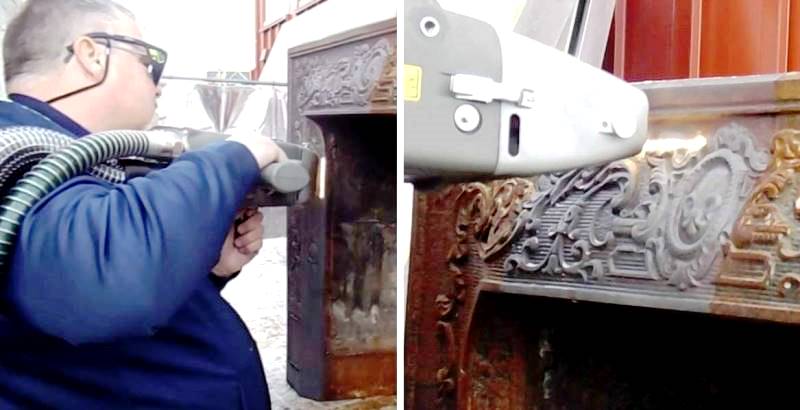
Laser cleaning can be an effective alternative to traditional methods like sandblasting when certain materials cannot withstand the abrasive impact of sand. Laser cleaning uses a focused laser beam to remove contaminants, coatings, or undesired materials from a surface. It’s a precise and controlled method that is suitable for a variety of materials.
Materials that can be laser cleaned when sandblasting is not an option include:
- Metals: Is often used on metals like steel, aluminum, copper, and others. It can remove rust, paint, oxides, and other contaminants without causing damage to the metal substrate.
- Stone and Concrete: Can be applied to stone and concrete surfaces to remove graffiti, coatings, and atmospheric pollutants without causing damage to the underlying material.
- Historical Artifacts and Artwork: Is gentle enough to be used on delicate surfaces such as historical artifacts, sculptures, and artwork. It can remove accumulated dirt, soot, or unwanted coatings without harming the original material.
- Electronic Components: Is suitable for removing contaminants from electronic components and circuit boards without causing damage to the sensitive electronics.
- Rubber: Can be used on rubber surfaces to remove coatings or contaminants without causing damage to the rubber itself.
- Plastics: Certain types of plastics can be laser cleaned to remove coatings or contaminants. However, the effectiveness of laser cleaning on plastics may depend on the specific type of plastic and the nature of the contaminants.
- Glass: Can be used on glass surfaces to remove coatings or contaminants without scratching or damaging the glass.
- Ceramics:Is applicable to some ceramic materials for the removal of coatings, residues, or contaminants.
It’s important to note that the effectiveness of laser cleaning can vary depending on the specific material, the type of contaminants, and the laser parameters used. Additionally, safety precautions must be taken, and the process should be performed by trained professionals to ensure proper and safe application.
Metals
Laser cleaning is particularly effective on various metal surfaces. It can be used to remove a range of contaminants and coatings from metals without causing damage to the underlying material.
Some common applications of laser cleaning on metals include:
- Rust Removal: Can efficiently remove rust or corrosion from metal surfaces. The laser energy is absorbed by the rust, causing it to evaporate and leave a clean metal surface behind.
- Paint Stripping: Is effective for removing paint from metal surfaces. It can be used in applications such as preparing metal structures for repainting or removing unwanted coatings.
- Oxide and Scale Removal: Metals like aluminum and stainless steel often develop oxide or scale layers. Laser cleaning can be used to eliminate these layers, restoring the metal to its original condition.
- Weld Cleaning: Is used to clean and prepare surfaces before welding by removing contaminants, oxidation, and other unwanted materials from the welding area.
- Surface Preparation:Is suitable for preparing metal surfaces for various processes such as bonding, coating, or inspection. It provides a clean and controlled surface without the use of abrasive methods.
- Historical Artifact Restoration: Is employed in the restoration of metal artifacts, sculptures, and structures without causing damage to the original metal.
When using laser cleaning on metals, it’s essential to consider the type of metal and adjust the laser parameters accordingly to achieve optimal results. The process is precise and controllable, making it a valuable tool in industries such as manufacturing, construction, restoration, and conservation. As with any industrial process, safety measures should be followed to protect operators and ensure the proper functioning of equipment.
Stone and Concrete
Laser cleaning is also applicable to stone and concrete surfaces, offering a non-contact and precise method for removing contaminants, coatings, and unwanted materials.
Here are some specific applications for laser cleaning on stone and concrete:
- Graffiti Removal: Can effectively remove graffiti from stone and concrete surfaces. The laser energy is absorbed by the graffiti material, causing it to evaporate without damaging the underlying surface.
- Coating and Paint Removal: Is suitable for removing various coatings, paints, and contaminants from stone and concrete structures. It can be used to prepare surfaces for repainting or other applications.
- Atmospheric Pollution Cleaning: Stone and concrete surfaces exposed to outdoor environments can accumulate pollutants over time. Laser cleaning can be used to remove these pollutants without causing damage to the original material.
- Historical Restoration: Is employed in the restoration of historical stone structures, monuments, and sculptures. It allows for precise cleaning without causing harm to the delicate surfaces.
- Fire Damage Restoration: In the aftermath of a fire, laser cleaning can be used to remove soot and smoke residues from stone and concrete surfaces, helping in the restoration process.
- Surface Preparation: Is useful for preparing stone and concrete surfaces before treatments such as sealing or coating. It provides a clean and well-prepared surface for subsequent applications.
Laser cleaning offers advantages in terms of precision, control, and minimal impact on the substrate. However, like with any application, it’s important to consider the specific characteristics of the stone or concrete and tailor the laser parameters accordingly. Safety precautions, including the use of proper eye protection, are essential when working with lasers. As with other materials, the effectiveness of laser cleaning on stone and concrete depends on factors such as the type of material, the nature of the contaminants, and the laser parameters used.
Historical Artifacts and Artwork
Laser cleaning is a valuable technique for the restoration and conservation of historical artifacts and artwork. It provides a non-contact and precise method for removing contaminants, dirt, soot, coatings, and unwanted materials from delicate surfaces without causing damage.
Here are some specific applications of laser cleaning in the context of historical artifacts and artwork:
- Removal of Dirt and Soot: Can gently remove accumulated dirt and soot from the surfaces of historical artifacts and artwork. The controlled laser beam allows for precise cleaning without causing abrasion or harm to the original material.
- Cleaning Paintings and Murals: Is used to clean the surfaces of paintings and murals, removing layers of dirt, smoke residues, or discolored varnish. It can reveal the original colors and details of the artwork.
- Restoration of Sculptures: Is employed in the restoration of sculptures made from various materials, including metal, stone, and wood. It can remove coatings, corrosion, and contaminants while preserving the integrity of the sculpture.
- Cleaning Ceramics and Porcelain: Is suitable for cleaning delicate ceramics and porcelain artifacts. It can remove stains, coatings, and contaminants without causing damage to the fragile surfaces.
- Precision Cleaning of Intricate Details: Allows conservators to target specific areas with precision, making it suitable for cleaning intricate details and fine features on historical artifacts and artwork.
- Removal of Biological Growth: Can be used to remove biological contaminants such as mold or algae from historical artifacts and artwork, particularly those stored in damp or humid conditions.
- Cleaning Manuscripts and Parchments: Is employed in the restoration of ancient manuscripts and parchments, removing stains and contaminants without physical contact.
- Conservation of Metal Artifacts: Is effective for the conservation of metal artifacts, such as coins, weapons, or jewelry. It can remove corrosion and unwanted coatings while preserving the original metal.
When applying laser cleaning to historical artifacts and artwork, it’s crucial to assess the specific characteristics of the material and adjust the laser parameters accordingly. Conservation professionals with expertise in both the materials and laser technology are typically involved in these processes. Additionally, safety measures and conservation ethics are essential considerations during the restoration of historical items.
Electronic Components
Laser cleaning is a precise and controlled method that can be applied to electronic components and circuit boards for the removal of contaminants and residues without causing damage to the sensitive electronic parts.
Specific applications of laser cleaning in the context of electronic components:
- Solder Flux Residue Removal: Is used to remove solder flux residues from circuit boards after soldering processes. Flux residues can impact the performance and reliability of electronic components, and laser cleaning provides a non-contact method for their removal.
- Surface Preparation for Bonding: Before bonding or encapsulating electronic components, surfaces need to be free from contaminants. Laser cleaning can be employed to prepare surfaces by removing dust, oils, and other unwanted materials, ensuring proper adhesion.
- Connector and Contact Cleaning: Is suitable for cleaning connectors, contacts, and other critical areas on electronic components. It can remove oxidation, dirt, and other contaminants that might affect electrical conductivity.
- PCB Depaneling: Is used in the depaneling process of printed circuit boards (PCBs) to remove excess resin, debris, or other residues from the edges of the PCBs after they have been separated.
- Selective Coating Removal: In situations where a specific coating needs to be removed without damaging the underlying components, laser cleaning can be applied selectively. This is useful for rework and repair processes.
- Surface Cleaning in Cleanroom Environments: Non-contact method that can be applied in cleanroom environments where traditional cleaning methods might introduce contaminants. It helps maintain a controlled and particle-free environment.
- Restoration of Vintage Electronics: In the restoration of vintage electronic equipment, laser cleaning can be used to remove dust, dirt, and oxidation from components without risking damage to fragile or rare parts.
When using laser cleaning on electronic components, it’s essential to consider the specific requirements of the components and adjust the laser parameters accordingly. This includes factors such as the material composition of the components, the nature of the contaminants, and the desired level of cleanliness. Additionally, safety precautions should be followed to protect sensitive electronic components from excessive heat or other potential adverse effects. Professional expertise in both electronics and laser technology is often required for successful application in electronic component cleaning processes.
Rubber
Laser cleaning can be applied to rubber surfaces for the removal of coatings, contaminants, and undesired materials. However, the effectiveness of laser cleaning on rubber may depend on the type of rubber and the specific application.
Considerations and applications for laser cleaning on rubber:
- Coating Removal: Can be used to remove coatings, such as paints or adhesives, from rubber surfaces. The laser energy is absorbed by the coating, causing it to evaporate or be expelled from the rubber.
- Contaminant Removal: Can effectively remove contaminants like dirt, oil, or other substances from rubber surfaces. This can be useful in applications where a clean rubber surface is essential, such as in manufacturing processes.
- Surface Preparation: Provides a non-contact method for preparing rubber surfaces before bonding or coating. It removes contaminants without causing damage to the rubber substrate, ensuring better adhesion.
- Mold Cleaning: In rubber manufacturing, molds used in the shaping of rubber products can accumulate residues and contaminants. Laser cleaning can be applied to clean these molds without the need for disassembly.
- Tire Mold Cleaning:Is used in the tire manufacturing industry to clean molds used for shaping and curing tires. It helps maintain the quality and consistency of the tire production process.
It’s important to note that the effectiveness of laser cleaning on rubber surfaces can vary depending on factors such as the type of rubber, the nature of the contaminants, and the laser parameters used. Additionally, certain types of rubber may absorb laser energy differently, and the process should be carefully optimized to prevent damage to the rubber material.
As with any laser cleaning application, safety precautions must be followed. Adequate ventilation and protective measures are essential to ensure the safety of operators and to prevent the release of any potentially harmful byproducts during the cleaning process. Before implementing laser cleaning on rubber, it’s advisable to conduct testing to determine the optimal parameters for the specific application and type of rubber being treated.
Plastics
Laser cleaning can be applied to certain types of plastics for the removal of coatings, contaminants, and unwanted materials. However, the effectiveness of laser cleaning on plastics depends on the specific type of plastic and the nature of the contaminants.
Considerations and applications for laser cleaning on plastics:
- Paint and Coating Removal: Can be used to remove paint, coatings, or other surface finishes from plastic components. The laser energy is absorbed by the coating, causing it to evaporate or be expelled from the plastic surface.
- Adhesive Residue Removal: Can be effective in removing adhesive residues from plastic surfaces, such as those left behind by labels or tapes.
- Mold Release Agent Cleaning: In plastic molding processes, molds may have residual release agents that can affect subsequent manufacturing steps. Laser cleaning can be applied to remove these residues without damaging the plastic.
- Surface Preparation for Bonding: Can prepare plastic surfaces for bonding or other processes by removing contaminants and ensuring a clean and well-prepared surface.
- Selective Cleaning: Can be applied selectively to target specific areas on plastic components, allowing for precise cleaning without affecting surrounding areas.
- Degreasing: Can be used to remove oils, greases, and other contaminants from plastic surfaces in applications where cleanliness is crucial, such as in the electronics or medical device industries.
It’s important to note that not all types of plastics are suitable for laser cleaning, and the process should be carefully optimized for each specific plastic material. The absorption characteristics of the plastic and the wavelength of the laser are critical factors in determining the effectiveness of the cleaning process.
As with any laser cleaning application, safety precautions must be followed. Adequate ventilation and protective measures are essential to ensure the safety of operators and to prevent the release of any potentially harmful byproducts during the cleaning process. Before implementing laser cleaning on plastics, it’s advisable to conduct testing to determine the optimal parameters for the specific application and type of plastic being treated.
Glass
Laser cleaning can be effectively applied to glass surfaces for the removal of contaminants, coatings, and unwanted materials.
Considerations and applications for laser cleaning on glass:
- Paint and Coating Removal: Is used to remove paint, coatings, or other surface finishes from glass surfaces. The laser energy is absorbed by the coating, causing it to evaporate or be expelled from the glass.
- Graffiti Removal: Is effective in removing graffiti from glass surfaces. It can target the graffiti material without damaging the underlying glass.
- Oxide and Stain Removal: Can be applied to remove oxides, stains, and other contaminants from glass surfaces, restoring the clarity and transparency of the glass.
- Surface Preparation: Can prepare glass surfaces for various applications, such as bonding or coating, by removing contaminants and ensuring a clean surface.
- Historical Glass Restoration: Is used in the restoration of historical glass artifacts, windows, and structures. It allows for precise cleaning without causing damage to the glass.
- Selective Cleaning: Can be applied selectively to target specific areas on glass surfaces, providing a controlled and precise cleaning process.
- Removal of Adhesive Residues:Can effectively remove adhesive residues from glass surfaces, such as those left behind by labels or tapes.
It’s important to note that the effectiveness of laser cleaning on glass depends on factors such as the type of glass, the nature of the contaminants, and the laser parameters used. Additionally, safety precautions must be followed to protect operators and ensure the proper functioning of equipment.
The wavelength of the laser used for glass cleaning is typically chosen based on the absorption characteristics of the contaminants or coatings on the glass. Laser cleaning is a non-contact method that can provide a controlled and precise cleaning process, making it suitable for applications where the integrity of the glass surface is crucial.
Ceramics
Laser cleaning can be applied to ceramics for the removal of coatings, contaminants, and unwanted materials. The process can be controlled and precise, making it suitable for delicate ceramic surfaces.
Here are some considerations and applications for laser cleaning on ceramics:
- Coating Removal: Is used to remove coatings, such as paint, glaze, or other surface finishes, from ceramic surfaces. The laser energy is absorbed by the coating, causing it to evaporate or be expelled from the ceramic.
- Historical Artifact Restoration: Is employed in the restoration of historical ceramic artifacts, sculptures, and structures. It allows for precise cleaning without causing damage to the delicate ceramic surface.
- Surface Preparation: Can prepare ceramic surfaces for various applications, such as bonding or glazing, by removing contaminants and ensuring a clean surface.
- Stain Removal: Can be applied to remove stains and discolorations from ceramic surfaces, restoring the original appearance of the material.
- Selective Cleaning: Can be applied selectively to target specific areas on ceramic surfaces, providing a controlled and precise cleaning process without affecting surrounding areas.
- Mold Cleaning: In ceramic manufacturing processes, molds may have residual materials that can impact the quality of the final product. Laser cleaning can be used to clean these molds without damaging the ceramic.
It’s important to note that the effectiveness of laser cleaning on ceramics depends on factors such as the type of ceramic, the nature of the contaminants, and the laser parameters used. The wavelength of the laser is typically chosen based on the absorption characteristics of the contaminants or coatings on the ceramic.
As with any laser cleaning application, safety precautions must be followed. Adequate ventilation and protective measures are essential to ensure the safety of operators and to prevent the release of any potentially harmful byproducts during the cleaning process. Before implementing laser cleaning on ceramics, it’s advisable to conduct testing to determine the optimal parameters for the specific application and type of ceramic being treated.