
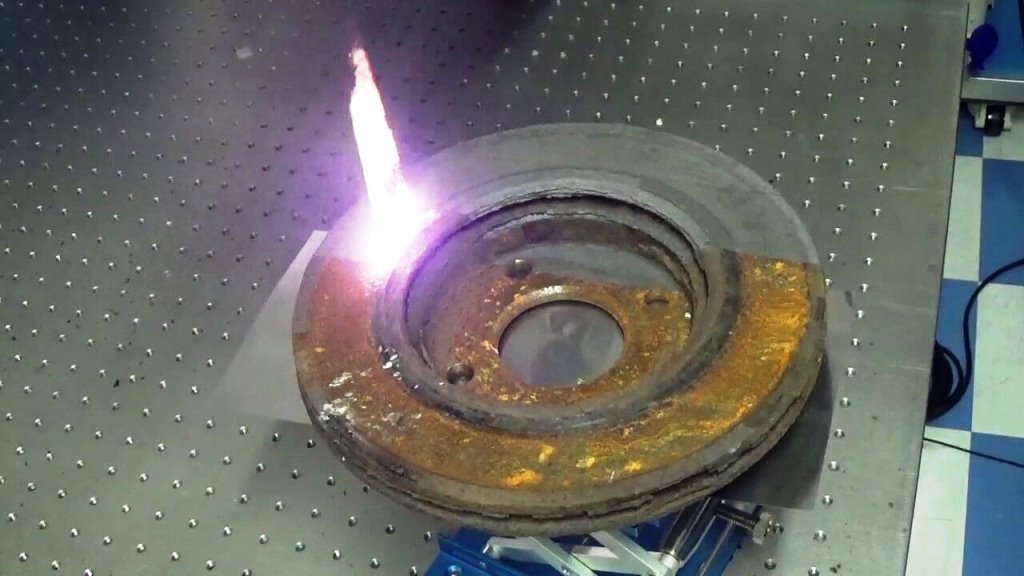
Laser cleaning technology, a marvel of modern engineering, stands at the forefront of industrial cleaning solutions, offering precision, efficiency, and environmental sustainability. This innovative method harnesses the power of laser light to remove unwanted materials from a variety of surfaces without the need for harsh chemicals or abrasive techniques. As industries worldwide increasingly prioritize eco-friendly and efficient processes, the role of laser cleaning has become more crucial than ever.
The significance of innovation in this field cannot be overstated. With each technological advancement, laser cleaning becomes more adaptable, safer, and suitable for a wider range of applications. From delicate historical artifact restoration to robust industrial rust removal, the expanding capabilities of laser cleaning technology demonstrate its pivotal role in meeting diverse cleaning challenges.
In this article, we delve into the latest advancements that are reshaping the landscape of laser cleaning. We will explore groundbreaking new types of lasers and the enhanced techniques that elevate both the efficiency and safety of this process. From the development of more compact and energy-efficient laser systems to the introduction of sophisticated control software, each innovation offers a glimpse into a future where laser cleaning is more accessible and effective than ever. We will also examine the real-world applications of these advancements across various industries, highlighting how they contribute to operational efficiency and environmental sustainability.
Join us as we embark on this enlightening journey through the world of laser cleaning innovations, where technology not only cleans but also preserves and protects.
Background of Laser Cleaning
A Brief History of Laser Cleaning Technology
Laser cleaning technology, a concept that might have seemed like science fiction a few decades ago, has a surprisingly long history. The journey began in the mid-20th century, following the invention of the laser in 1960. Initially, lasers were a scientific curiosity, but it wasn’t long before their potential in various applications, including cleaning, began to be explored. The first significant uses in cleaning emerged in the 1980s, primarily for delicate tasks such as restoring artworks and historic monuments. This was a game-changer in conservation, providing a method that was less invasive and more precise than traditional techniques.
Over the years, the technology evolved rapidly. The 1990s and early 2000s saw significant advancements in laser power and control, allowing for broader applications in industrial settings. Today, laser cleaning is a sophisticated and versatile tool used in numerous industries, ranging from aerospace to automotive, and even in the intricate field of semiconductor manufacturing.
Basic Principles of How Laser Cleaning Works
At its core, laser cleaning operates on a simple principle: using focused laser light to remove unwanted material from a surface. The process involves directing a laser beam onto the surface, where its energy is absorbed by the unwanted layer, such as rust, paint, or contaminants. This absorption causes the layer to either vaporize or flake off, effectively cleaning the surface without physical contact.
There are two primary mechanisms at play: ablation and thermal decomposition. In ablation, the energy of the laser is used to break the bond between the substrate and the contaminant, lifting it away. Thermal decomposition, on the other hand, involves heating the unwanted material to a point where it chemically breaks down.
Traditional Laser Cleaning Methods and Their Applications
Traditional laser cleaning methods typically revolved around continuous wave (CW) and Q-switched lasers. CW lasers emit a constant laser beam and are effective for uniform cleaning tasks, like removing coatings from large surface areas. Q-switched lasers, emitting in pulses, offer higher peak powers and are thus ideal for more precise, localized cleaning tasks.
These methods found their applications in various areas. In the art restoration field, lasers provided a non-contact method to clean sensitive surfaces, preserving the underlying material. In industrial settings, they were used to remove rust and coatings from metal parts, prepare surfaces for welding or painting, and even clean intricate machinery without disassembly.
As the technology advanced, so did its applications, paving the way for the modern innovations that we see today. These innovations have taken laser cleaning to new heights, enhancing efficiency, safety, and adaptability across a range of industries.
Latest Advancements in Laser Technologies
Introduction to New Types of Lasers Recently Developed
In recent years, the field of laser technology has witnessed a surge of innovations, leading to the development of new types of lasers that are revolutionizing the industry. These advancements are not just refinements of existing technology, but rather, they represent significant leaps forward. Key among these are fiber lasers and ultra-short pulse lasers, each bringing unique benefits to the realm of laser cleaning.
Fiber lasers, characterized by their use of a doped fiber optic cable as the active gain medium, have emerged as a game-changer. They offer high beam quality, greater efficiency, and increased power output compared to traditional solid-state lasers. Another groundbreaking development is the ultra-short pulse lasers, like picosecond and femtosecond lasers. These lasers emit pulses of light that last for trillionths to quadrillionths of a second. The incredibly short duration of these pulses means they can remove contaminants with minimal to no heat damage to the substrate, a phenomenon known as “cold ablation.”
Comparative Analysis of These New Lasers with Traditional Ones
When compared to traditional lasers, these new technologies offer several distinct advantages. Fiber lasers, for instance, demonstrate greater efficiency in energy consumption and have a smaller footprint than their predecessors. They are also more robust and require less maintenance, making them ideal for harsh industrial environments.
Ultra-short pulse lasers, on the other hand, offer unparalleled precision. Their ability to deliver powerful, concentrated bursts of energy in extremely short durations allows for the selective removal of contaminants without affecting the underlying material. This precision is particularly valuable in industries where maintaining the integrity of the substrate is critical.
Advantages of the Latest Laser Technologies in Terms of Efficiency and Safety
The advantages of these latest laser technologies extend well beyond improved cleaning results. In terms of efficiency, both fiber and ultra-short pulse lasers are capable of faster processing speeds, thereby reducing the time required for cleaning operations. This increase in speed, coupled with their precision, allows for more efficient use of energy and resources.
From a safety perspective, these new laser technologies represent a significant step forward. The precision and control they offer reduce the risk of damage to the substrate, which is crucial in applications involving delicate or expensive materials. Moreover, the minimal generation of heat and secondary waste makes them safer for operators and more environmentally friendly.
In summary, the latest advancements in laser technologies are setting new standards in the field of laser cleaning. With improved efficiency, precision, and safety, these new lasers are not just enhancing existing applications but are also opening doors to new possibilities in various industries.
Innovative Techniques in Laser Cleaning
Description of New Techniques and Methods in Laser Cleaning
Recent advancements in laser cleaning have not only involved the development of new types of lasers but also the emergence of innovative techniques that enhance the effectiveness and applicability of laser cleaning. One such technique is the implementation of automated and robotic laser cleaning systems. These systems combine precision laser technology with robotic arms or drones, enabling efficient cleaning of large or hard-to-reach surfaces, such as aircraft exteriors or large industrial machinery.
Another significant innovation is the integration of real-time monitoring and control systems. These systems use advanced sensors and feedback mechanisms to adjust the laser parameters on-the-fly, optimizing the cleaning process for different contaminants and surfaces. This adaptability ensures consistent cleaning quality and prevents damage to the substrate.
Additionally, the development of dual-wavelength laser systems presents a versatile solution for complex cleaning tasks. These systems utilize two different laser wavelengths in a single setup, each targeting specific types of contaminants or layers. This approach is particularly effective for surfaces with multiple layers of different materials that need to be selectively removed.
Case Studies or Examples Where These Techniques Have Been Successfully Implemented
One notable case study is the use of automated laser cleaning in the restoration of historic monuments. For instance, the cleaning of the blackened surface of the Notre-Dame Cathedral in Paris involved robotic laser cleaning systems that delicately removed centuries of grime without damaging the underlying stone.
In the aerospace industry, the implementation of robotic laser cleaning has revolutionized the maintenance process. An example is the cleaning of coating layers from aircraft components, where precision is paramount. The use of robotic systems has not only improved the quality of cleaning but also significantly reduced the time and labor involved.
Discussion on How These Techniques Improve Upon Previous Methods
These innovative techniques represent a significant improvement over previous laser cleaning methods. The automation and robotics introduce a level of precision and consistency that is difficult to achieve with manual cleaning. This not only enhances the quality of the cleaning process but also reduces the risk of human error and the potential for damage to sensitive surfaces.
Real-time monitoring and control systems have elevated the adaptability of laser cleaning, making it possible to tailor the cleaning process to specific requirements. This ensures optimal results across a wide range of surfaces and contaminants, something that was challenging with more traditional, one-size-fits-all laser setups.
Finally, dual-wavelength systems offer a level of versatility previously unattainable. By targeting different materials effectively, these systems can handle complex cleaning tasks in a single operation, thereby increasing efficiency and reducing the overall cost.
In conclusion, these innovative techniques in laser cleaning are not just incremental improvements but are reshaping the possibilities and applications of laser cleaning technology in various industries.
Enhancing Efficiency and Safety
The latest developments in laser cleaning technologies and techniques have significantly enhanced both the efficiency and safety of the cleaning process, bringing transformative impacts to various industries.
Enhancing Efficiency with New Technologies and Techniques
- Increased Speed and Precision: Modern laser systems, especially those utilizing ultra-short pulse lasers, are capable of delivering high energy in very short durations. This allows for rapid cleaning without compromising precision, significantly speeding up the process while ensuring accuracy.
- Reduced Labor and Downtime: Automated and robotic laser cleaning systems minimize the need for manual labor and can operate continuously, reducing both the time and cost associated with labor-intensive cleaning methods. Additionally, the ability to clean components without disassembly reduces downtime in maintenance procedures, crucial for industries where operational continuity is key.
- Adaptability and Customization: Advanced control systems in laser cleaning equipment allow for real-time adjustments, making the cleaning process highly adaptable to varying materials and contaminants. This flexibility leads to improved efficiency as the same system can be used across a range of applications without the need for extensive reconfiguration.
Safety Improvements with Innovations in Laser Cleaning
- Minimized Heat and Physical Contact: The precision of modern lasers, particularly ultra-short pulse lasers, minimizes the heat affected zone, reducing the risk of thermal damage to sensitive materials. The non-contact nature of laser cleaning also eliminates the need for abrasive materials or harsh chemicals, reducing health risks to operators and environmental impact.
- Enhanced Control and Reduced Errors: The integration of advanced control systems and automation reduces the potential for human error. Automated systems can consistently apply the optimal power, duration, and focus, enhancing safety by preventing overexposure or accidental damage to the materials being cleaned.
- Environmentally Friendly Process: Modern laser cleaning methods produce less waste and contaminants compared to traditional methods like chemical cleaning or abrasive blasting. This not only makes the process safer for operators but also reduces environmental pollution.
Potential Impact on Different Industries
- Cultural Heritage and Art Restoration: The precision and gentleness of modern laser cleaning techniques are invaluable for the restoration and preservation of historical artifacts, where maintaining the integrity of the original material is paramount.
- Aerospace and Automotive: In industries where reliability and precision are crucial, the efficiency and safety of laser cleaning ensure optimal maintenance of critical components, enhancing both the performance and lifespan of machinery.
- Manufacturing and Heavy Industry: The ability to quickly and safely clean large machinery and components with minimal downtime is revolutionizing maintenance procedures, improving both productivity and worker safety.
- Medical and Semiconductor Fields: In sectors where sterility and precision are non-negotiable, the advancements in laser cleaning technologies provide a method that is both effective and safe, ensuring the cleanliness of sensitive equipment and components.
In summary, the advancements in laser cleaning technologies not only increase efficiency but also significantly enhance safety across various applications. These improvements are proving to be pivotal in industries ranging from cultural heritage preservation to high-tech manufacturing, redefining the standards of cleanliness and maintenance.
Challenges and Limitations
While the advancements in laser cleaning technologies have been transformative, they are not without challenges and limitations. Understanding these obstacles is crucial for further development and wider adoption of these technologies.
Challenges Faced by New Laser Cleaning Technologies
- High Initial Costs: One of the primary barriers to the adoption of advanced laser cleaning systems is their initial cost. The expense of ultra-short pulse lasers and sophisticated automated systems can be prohibitive for small and medium-sized enterprises.
- Technical Expertise Requirements: Operating and maintaining these advanced laser systems often require specialized training and expertise. This necessity can pose a challenge, particularly in sectors where such expertise is not readily available.
- Material Limitations: While laser cleaning is versatile, it is not universally applicable to all materials. Certain substrates can be damaged by laser exposure, and the effectiveness of laser cleaning can vary depending on the type of contaminant and the substrate material.
- Energy Consumption: Despite their efficiency in cleaning, high-powered lasers, especially those used for industrial applications, can be significant consumers of energy. This aspect can be a concern in terms of operational costs and environmental impact.
Potential Solutions and Ongoing Research
- Cost Reduction Through Innovation and Scale: As the technology matures and demand increases, economies of scale can potentially lower the costs. Ongoing research is also focused on developing more cost-effective laser systems without compromising performance.
- Training and Educational Programs: Developing comprehensive training programs and certifications for operating laser cleaning systems can help mitigate the skill gap. Collaborations between manufacturers and educational institutions could play a crucial role in this.
- Material-Specific Research: Further research into the interactions between different laser types and materials can help in developing guidelines for optimal laser settings for various applications. This could minimize the risk of damage and broaden the applicability of laser cleaning.
- Energy-Efficient Laser Technologies: Innovations aimed at increasing the energy efficiency of laser systems are essential. Research into alternative power sources, such as renewable energy integration, and improvements in laser efficiency can address concerns regarding energy consumption.
- Addressing Environmental Concerns: Although laser cleaning is generally more environmentally friendly than traditional methods, there is still a need for research on minimizing any potential environmental impacts, such as emissions or byproducts produced during the cleaning process.
In conclusion, while there are challenges and limitations to the current state of laser cleaning technologies, ongoing research and development efforts are actively addressing these issues. These efforts are not only aimed at overcoming existing barriers but also at unlocking the full potential of laser cleaning in a variety of applications.
Future Prospects
The future of laser cleaning technology appears to be on a trajectory of continuous innovation and expansion. As research and development persist, we can anticipate several exciting developments and breakthroughs that will further redefine the capabilities and applications of laser cleaning.
Anticipated Developments in Laser Cleaning
- Miniaturization and Portability: Future advancements may lead to the development of more compact and portable laser cleaning systems. This miniaturization would not only make the technology more accessible but also versatile, allowing for its use in remote or confined spaces.
- Integration of Artificial Intelligence (AI): The integration of AI and machine learning algorithms could revolutionize laser cleaning. AI can be used to automatically adjust laser parameters for different materials and contaminants, enhancing efficiency and reducing the potential for error.
- Advanced Beam Shaping and Control: Innovations in beam shaping and control technologies can provide unprecedented precision. This would allow for more complex and delicate cleaning tasks, expanding the use of laser cleaning in fields like microelectronics and precision engineering.
- Eco-Friendly Developments: As sustainability becomes increasingly important, there will likely be a push towards developing laser cleaning systems that are even more energy-efficient and environmentally friendly, possibly integrating renewable energy sources.
Potential New Applications and Breakthroughs
- Space Exploration and Aviation: In space exploration, where environmental conditions are harsh and maintenance opportunities limited, robust and efficient laser cleaning systems could play a critical role in equipment maintenance and surface preparation.
- Medical Field Advancements: In the medical sector, particularly in the sterilization of surgical instruments and equipment, laser cleaning could offer a high level of precision and cleanliness without the use of chemicals.
- Cultural Heritage Preservation: Enhanced laser cleaning techniques could revolutionize the restoration and preservation of cultural heritage artifacts. Future developments might allow for even more delicate and precise cleaning, preserving the integrity of priceless historical items.
- Underwater Cleaning Applications: The development of waterproof and pressure-resistant laser systems could open up applications in underwater cleaning, such as the maintenance of ships and offshore structures, providing an eco-friendly alternative to current methods.
The future of laser cleaning holds immense potential, not only in terms of technological advancements but also in its capacity to provide solutions across a diverse range of industries. From enhancing cultural heritage preservation to contributing to space exploration, the ongoing innovations in laser cleaning are poised to make significant impacts on our world.
Conclusion
As we have explored throughout this article, the field of laser cleaning is undergoing a remarkable evolution, driven by technological advancements and innovative applications. Here, we summarize the key points discussed and reflect on the broader impact of these innovations.
Key Points Discussed
- Historical Evolution: We began by tracing the history of laser cleaning, from its early days as a niche technology to its current status as a critical tool in various industries.
- Technological Advancements: The development of new laser types, such as fiber lasers and ultra-short pulse lasers, has significantly enhanced the efficiency, precision, and safety of laser cleaning.
- Innovative Techniques: We delved into how automated systems, real-time monitoring, and dual-wavelength lasers are reshaping the landscape of laser cleaning, offering adaptability and efficiency.
- Enhanced Efficiency and Safety: The advancements in technology and techniques have not only made laser cleaning more efficient but have also elevated safety standards, particularly in sensitive applications.
- Challenges and Solutions: While acknowledging the challenges like high costs and technical expertise requirements, we also discussed ongoing research and potential solutions that aim to make laser cleaning more accessible and sustainable.
- Future Prospects: Finally, we looked ahead at the exciting future of laser cleaning, including the potential integration of AI, further miniaturization, and new applications in diverse fields such as space exploration and underwater maintenance.
Final Thoughts on the Impact of These Innovations
The innovations in laser cleaning are not just incremental improvements; they represent a paradigm shift in how we approach cleaning and maintenance tasks across a spectrum of industries. By enhancing precision, efficiency, and safety, these advancements are making laser cleaning a more attractive option compared to traditional methods. Furthermore, the potential environmental benefits align well with the growing global emphasis on sustainable practices.
The impact of these innovations extends beyond the technical realm; they have the potential to conserve cultural heritage, improve medical sterilization processes, and contribute to space exploration. As the technology continues to evolve, we can expect laser cleaning to become an even more integral part of various industrial and preservation efforts.
In conclusion, the future of laser cleaning is bright, with ongoing innovations paving the way for more sophisticated, accessible, and environmentally friendly cleaning solutions. The continuous evolution of this technology holds great promise for a wide array of applications, making it a key player in the journey towards a more efficient and sustainable future.